




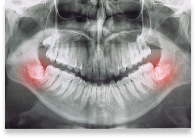


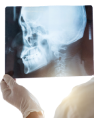
If a tooth is impacted, it cannot erupt through the gums properly. The maxillary cuspid (upper eyetooth or canine) commonly becomes impacted. The cuspid tooth is critical in your dental arch and plays an important role in your bite. The maxillary cuspid teeth are normally the last of the upper front teeth to grow in. They usually erupt and grow in around age 13. Every effort is made to erupt a cuspid tooth that becomes impacted.
What happens if the eyetooth will not erupt when proper space is available?
If the eyetooth will not erupt on its own, your orthodontist and oral surgeon will work together to get the impacted tooth or teeth to erupt. Your orthodontist will place braces on the upper arch to open a space for the impacted tooth to move into. If the baby cuspid is still in place, it is usually left until the permanent eyetooth is ready. When the space is ready, you will be referred to Dr. [doctor_name] to have the impacted cuspid exposed and bracketed.
Our oral surgeon will lift the gum on top of the impacted tooth to expose the tooth. If the baby tooth is still in place, it will be extracted at this time. An orthodontic bracket is bonded to the exposed tooth and a miniature gold chain is attached to the bracket. The chain is temporarily attached to the orthodontic arch wire. The impacted tooth may be left exposed by our oral surgeon, but in most cases, the gum is returned to its original place and sutured in place. If this is the case, the chain will remain visible and will exit a small hole in the gum.
When the patient returns to the orthodontist 1 to 14 days later, a rubber band is attached to the chain to put a slight pulling force on the tooth to move it into its proper place. This process is carefully controlled and may take up to a year to complete.
Studies have shown that if an impacted cuspid is identified early, treatment should begin at a younger age.
What to expect from surgery to expose and bracket an impacted tooth
In most cases, this surgery is performed with laughing gas and local anesthesia. If the patient desires to be asleep, the surgery will be performed under IV sedation, but this is not usually necessary. If one tooth is being exposed, the surgery will take about 75 minutes and about 105 minutes if both sides need treatment.
A limited amount of bleeding from the surgical sites is normal, but bruising is not common. Follow these tips to make your recovery as comfortable as possible:
- Use over-the-counter pain medications to lessen any discomfort
- Apply ice packs to the lip to lessen any swelling
- Eat soft foods at first
- Avoid sharp foods like chips and crackers
Please contact [practice_name] today to schedule an appointment and to learn more about treatment for impacted canines in [city], [state].